






Tyre Pressure for Caravans (A Safe, Practical Guide)
Tyre pressure is one of the most important “small” details in caravanning. When it’s right, towing feels stable, tyres run cooler, and your caravan tracks predictably. When it’s wrong, you can end up with faster tyre wear, poor braking feel, rougher handling, and in the worst cases, tyre failure, especially on long highway runs or hot days.
The tricky part is that there isn’t one universal tyre pressure that works for every caravan. The correct pressure depends on your tyres, your load, and where you’re towing. A lightly loaded caravan on sealed roads needs something different from a fully loaded touring setup on warm bitumen, and again different to corrugated gravel.
This guide explains how to think about caravan tyre pressure in a sensible, Australian touring context without turning it into a technical manual.
Important: Always follow the caravan manufacturer’s placard/handbook guidance first, and confirm the tyre’s load rating requirements. If in doubt, speak with a tyre professional. This guide is general information.
Why tyre pressure matters so much when towing
Caravan tyres carry a lot of responsibility. Unlike your tow vehicle tyres, caravan tyres can spend long hours rolling under steady load, often at highway speeds, in high temperatures, sometimes while the caravan is carrying water, gear, and accessories that bring the weight close to its limit.
Pressure affects:
- Heat buildup (heat is the enemy of tyres)
- Stability (especially in crosswinds and when trucks pass)
- Braking and handling feel
- Tyre wear pattern
- Impact resistance on rougher roads
A tyre that’s underinflated tends to flex more, run hotter, and wear the shoulders. Overinflation can reduce the tyre’s ability to absorb bumps and can wear the centre faster. The safest target is the pressure that matches the tyre’s load and the conditions you’re driving in.
Start here: the two places you should always check first
Before you take advice from a forum, check these:
1) The caravan’s tyre pressure placard (or handbook)
Many caravans include a tyre pressure recommendation. That recommendation is usually designed to suit the standard tyre size and the typical loading range of the van.
2) The tyre sidewall (and the tyre’s load index)
The sidewall tells you the tyre’s maximum pressure and other specs. But it’s not a direct instruction to “inflate to max”. Instead, it’s a reminder that the tyre has a designed operating range.
If your caravan has been fitted with different tyres than standard (or you’ve changed tyre type), the original placard pressure may no longer be the best reference on its own.
The most useful way to think about caravan tyre pressure
A practical mental model is:
- Heavier load = higher pressure requirement
- Rougher road = pressure strategy changes (but don’t guess wildly)
This is why tyre pressure advice is often confusing online. People give a number, but leave out the context: what tyres, what load, what conditions, what speed.
A safer approach is to base your starting point on the manufacturer’s guidance and then adjust thoughtfully based on your real-world loading and conditions.
How to set caravan tyre pressure safely (step-by-step)
Step 1: Know your “touring weight reality”
Ask yourself: are you travelling lightly, or close to full touring load?
Touring weight increases when you carry:
- full water tanks
- extra batteries/solar upgrades
- tools, recovery equipment
- outdoor cooking gear
- bikes and racks
If you’re touring heavy, you generally want to be closer to the recommended highway pressure range rather than “soft”.
Step 2: Check pressures cold (not after driving)
Tyre pressure rises as tyres warm up. Always check and set pressure when tyres are cold — ideally before you’ve driven, or after the caravan has been parked for a while.
If you measure after driving, the number you see is “hot pressure”, not your baseline.
Step 3: Use a reliable gauge (and be consistent)
Caravan tyres are not the place for a $2 servo gauge. A decent gauge is one of the best low-cost safety upgrades you can make, because it replaces “I think it’s fine” with an actual number.
Consistency matters more than perfection.
Step 4: Inspect tyres while you’re there
Every pressure check is also a quick safety check:
- look for cracks, bulges, uneven wear
- check tread condition
- check valve stems
- confirm wheel nuts are secure (as per manufacturer guidance)
A tyre can be correctly inflated and still be unsafe if it’s aged, damaged, or worn in a way that signals a deeper issue.
Highway towing: what matters most
On sealed roads at highway speed, heat management is the priority. Underinflation increases flex and heat, and heat increases risk.
If you’re doing long highway days:
- make sure you’re set to a pressure appropriate for your load
- avoid running “soft” just because it feels smoother
- check pressures in the morning before driving
- take breaks (tyres appreciate it too)
If you ever notice tyres looking “squashed” under load, that’s a warning sign. It often indicates pressure is too low for what the tyre is carrying.
Gravel and corrugations: be careful with “drop the pressure” advice
You’ll often hear that lowering tyre pressure helps on corrugations because it can reduce harshness and improve compliance. That can be true in some contexts, but it’s also where people get into trouble.
Dropping pressure without a plan can:
- increase heat buildup if you maintain highway speeds
- increase sidewall flex and damage risk
- increase the chance of de-beading on sharp impacts
- make handling feel vague
If you adjust pressures for gravel:
- reduce speed appropriately
- avoid extreme drops
- treat it as a controlled change, not a guess
- return to highway pressures when you’re back on sealed roads
If you’re new to touring, the safest default is: don’t make big pressure changes unless you understand how your tyres respond and you’re also changing speed and load expectations.
What about tyre pressure monitors (TPMS)?
A TPMS can be a great tool because it gives you early warning if something is changing, especially on longer trips where a slow leak can go unnoticed.
But TPMS isn’t a substitute for proper setup. Think of it like a smoke alarm: it doesn’t prevent the issue, but it helps you respond before it becomes a crisis.
Signs your tyre pressure may be wrong
Tyres usually tell you when something is off. Common clues include:
- Uneven wear (centre vs shoulders)
- Caravan feels unsettled or bouncy
- Excessive heat after a normal drive day
- Visible sidewall bulging under load
- Frequent pressure loss (possible leak or valve issue)
If you’re regularly adjusting pressure and the caravan still feels unstable, it may not be pressure alone. Load distribution, towball weight, suspension condition, and alignment can all contribute.
How this applies to Century Caravans (Venus range)
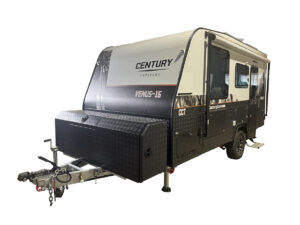
Century Caravans’ Venus range is built for Australian touring, and tyre pressure becomes especially relevant once you’re doing what these vans are designed for: long highway days, mixed road conditions, and real-world loads that include water, power upgrades, and touring gear.
The most helpful habit for Venus owners, whether you’re touring compact or running a bigger “home base” setup, is to treat tyre pressure as part of your regular departure routine:
- check pressures cold before travel days
- set pressure to suit how heavily you’re loaded
- keep an eye on heat and wear over time
- adjust thoughtfully for road conditions, not impulsively
It’s one of the easiest ways to improve towing stability and reduce the risk of tyre problems on the road.
FAQ
Should caravan tyres be inflated to the maximum pressure on the sidewall?
Not automatically. The sidewall shows the tyre’s maximum rating, not the ideal everyday operating pressure. Use the caravan placard/handbook guidance and adjust based on load.
How often should I check caravan tyre pressure?
Before major trips, and ideally before long towing days on tour. At a minimum, check weekly when travelling.
Does tyre pressure change with temperature?
Yes. Pressure rises as tyres warm up while driving and can vary with ambient temperature. Set pressures cold for consistency.
Is it safe to lower tyre pressure on corrugations?
It can be appropriate in some situations, but only if you also reduce speed and understand the trade-offs. Avoid large pressure drops without guidance.
Tags :
example, category, and, terms