



What Caravans Not to Buy in Australia: A Practical Buyer’s Checklist
Buying a caravan is exciting, but it is also a decision worth slowing down for. A caravan is not just a holiday purchase. It becomes part of how you travel, how confidently you tow, how comfortably you sleep, how much gear you can carry and how much maintenance you need to manage over time.
That is why the question “what caravans should I avoid?” is a sensible one.
The answer is rarely as simple as avoiding one brand, one size or one layout. A caravan that is wrong for one buyer might be perfect for another. The real risk is buying a caravan that does not match your tow vehicle, travel style, storage needs, budget or comfort expectations.
In Australia, where travellers may move between highways, coastal caravan parks, gravel roads, national parks and free-camping spots, the best caravan is not always the biggest or toughest-looking one. It is the one that is built and specified for the way you actually want to travel.
This guide explains the types of caravans to be cautious about, the warning signs to look for and how to make a better buying decision.
Avoid caravans that do not match your tow vehicle
This is one of the most important places to start.
A caravan may look perfect inside, but if it pushes your tow vehicle close to its limits, every trip can become more stressful than it needs to be. Many buyers look only at braked towing capacity, but that is just one number. You also need to think about ATM, tare weight, payload, towball weight, vehicle payload, rear axle load and GCM.
A common mistake is assuming that if a vehicle is rated to tow a certain amount, every caravan below that number is automatically suitable. In real touring, the vehicle is also carrying passengers, luggage, tools, accessories and the towball load from the caravan. That can reduce your available margin quickly.
Be cautious if a seller cannot clearly explain the caravan’s key weight figures, or if the payload is so limited that normal touring gear would push you close to the ATM.
A caravan should not just be technically towable. It should feel like a comfortable match for your vehicle once both are loaded for a real trip.
Avoid caravans with too little payload
Payload is the amount of weight you can add to the caravan before reaching its maximum legal loaded weight. It includes water, food, clothes, bedding, tools, accessories, cooking gear, outdoor furniture and anything else you pack.
A caravan with limited payload can look fine in the showroom but become frustrating on the road. You may need to travel with less water, avoid useful accessories or constantly think about what you can and cannot pack.
This matters even more if you plan to free camp. Water, batteries, solar equipment and outdoor gear all add weight. A caravan designed for self-sufficient touring needs enough payload to support that lifestyle.
Before buying, ask yourself what you realistically carry. Then check whether the caravan can handle that load without leaving you on the edge of its limits.
Avoid “off-road” caravans that are only rugged on the surface
The phrase “off-road caravan” is used widely, but not every off-road-looking caravan is built for serious mixed-road touring.
Be cautious if the caravan relies heavily on visual toughness: checker plate, dark decals, big tyres and adventure styling, but gives you little detail about the chassis, suspension, coupling, clearance, underbody protection and dust sealing.
True off-road capability starts underneath the caravan. It is about foundations, not just appearance. If you plan to travel on unsealed roads, corrugations or rougher campsites, the caravan needs to be built for vibration, movement, dust and uneven ground.
That does not mean every buyer needs a full off-road model. If you mostly stay on sealed roads and established caravan parks, an on-road caravan may be the smarter choice. The problem is paying for an “off-road” label without getting the build details that make it meaningful.
Avoid caravans with signs of water damage
Water damage is one of the biggest red flags in any caravan, especially when buying used.
Leaks can start small and become expensive. Look carefully around windows, roof joins, hatches, corners, vents, cupboards and wall panels. Soft flooring, musty smells, staining, swelling, bubbling surfaces or discoloured panels can all suggest past or current moisture problems.
The challenge is that water damage is not always obvious at first glance. A freshly cleaned caravan can still have hidden issues behind walls, under flooring or inside cupboards.
If you are buying used and you are not confident inspecting it yourself, arrange an independent inspection. It may feel like an extra cost, but it can save you from a much more expensive mistake.
Avoid layouts that look good but do not suit your daily routine
A caravan layout can look beautiful in photos and still be annoying to live with.
Before buying, imagine a normal day rather than a perfect showroom moment. Can one person cook while the other moves around? Is the bed easy to access? Can you use the bathroom comfortably? Is there somewhere for wet towels, shoes, jackets and daily items? Can you reach storage without unpacking half the caravan?
Some buyers choose a layout because it has the biggest lounge, the prettiest kitchen or the most features packed into the smallest space. But on tour, flow matters more than visual impact.
Avoid layouts that force you into compromises you already know will irritate you. If you dislike making up a bed every night, a convertible lounge-bed may not be right for long trips. If you cook often, a tiny kitchen with poor bench space may become frustrating. If you value privacy and self-sufficiency, a caravan without a bathroom may limit how you travel.
The best layout is the one that fits your habits, not the one with the longest feature list.
Avoid caravans that are too large for how you actually travel
Bigger caravans can be wonderfully comfortable, but more space is not always better.
A larger caravan may give you a bigger bed, more storage, a more spacious ensuite and a better lounge area. But it can also mean more weight, a stronger tow vehicle requirement, harder storage at home, more effort reversing into tight sites and less flexibility in smaller campsites.
If you mostly travel as a couple, move frequently and spend much of your time outdoors, a smaller caravan may feel easier and more enjoyable than a large van that is technically more comfortable inside.
Do not buy the biggest caravan you can afford just because it feels impressive. Buy the size that matches your trip style.
For some buyers, that may be a compact self-contained model like an 11ft, 13ft or 14ft caravan. For others, a 16ft or 19ft layout may be the right balance of comfort and touring capability. The key is choosing deliberately.
Avoid caravans that are too small for your comfort needs
The opposite mistake is also common: buying too small because the caravan feels easy to tow or the price is attractive.
A compact caravan can be brilliant if the layout suits you. But if you need a permanent bed, proper bathroom space, more indoor seating or extra storage for long trips, a very small caravan may start to feel limiting.
This is especially important if you are planning extended touring. What feels fine for two nights may feel cramped after two weeks, especially in wet weather when you spend more time inside.
A small caravan should feel efficient, not restrictive. If you step inside and already feel like you would be compromising on the things you care about most, it may not be the right choice.
Avoid caravans with unclear specifications
A serious buyer should be able to access clear specifications.
You should be able to confirm the caravan’s weights, dimensions, water capacity, battery and solar setup, fridge, cooking appliances, bathroom arrangement, suspension, coupling, chassis details and included equipment.
Be cautious if information is vague, inconsistent or difficult to verify. This matters because small differences can affect towing, insurance, servicing, usability and price.
For example, “solar included” is not enough detail. How many watts? What battery capacity? What chemistry? Is there an inverter? How is the system managed? Similarly, “off-road capable” is not enough. What suspension? What coupling? What clearance? What protection? What sealing?
A good caravan does not need to be the most expensive one, but it should be clearly specified.
Avoid caravans that do not support your camping style
A caravan should match how you like to camp.
If you love caravan parks, powered sites, amenities blocks and established routes, you may not need the most advanced off-grid setup. A comfortable on-road caravan with a practical layout may be better value.
If you want to free camp regularly, the caravan needs to support that. Look carefully at water capacity, grey water, battery capacity, solar input, inverter capability, fridge efficiency, hot water, cooking options and storage.
If you want to travel on unsealed roads, the foundations matter. Suspension, coupling, clearance, underbody protection and dust sealing should be part of your decision.
Avoid buying based on a dream version of travel that does not match what you will actually do. The best caravan is the one you will use often and confidently.
Avoid used caravans with poor maintenance history
A used caravan can be good value, but maintenance history matters.
Ask about servicing, brakes, bearings, tyres, batteries, water system maintenance, seals, appliances and any past repairs. If the owner cannot explain how the caravan has been maintained, proceed carefully.
Tyres deserve special attention. Caravan tyres can age out before they wear out, especially if the van has been sitting for long periods. Old tyres, cracked sidewalls or uneven wear can signal future costs.
Also check batteries. A caravan with old or poorly maintained batteries may require replacement soon, especially if it uses an off-grid setup.
Used caravans can save money upfront, but only if you understand what you may need to repair, replace or upgrade after purchase.
Avoid caravans where the cheapest price is the main attraction
Price matters, but the cheapest caravan is not always the best value.
A low price may reflect a simpler build, fewer inclusions, older components, limited after-sales support, hidden damage or features you will need to add later. Sometimes a slightly more expensive caravan is better value because it already includes the systems you need.
The right question is not “what is the cheapest caravan I can buy?” It is “what is the best caravan for the way I want to travel, within my budget?”
If a cheaper caravan lacks the bathroom, power system, water capacity, layout or towing suitability you need, it may not stay cheap for long.
Avoid buying without checking storage and ownership costs
Before buying, think about where the caravan will live when you are not using it.
Can it fit at home? Will it clear the driveway? Is there enough turning room? Will you need off-site storage? If so, what does that cost?
Also budget for registration, insurance, servicing, tyres, accessories, maintenance and possible tow vehicle upgrades. These costs are not reasons to avoid caravanning, but they should be part of the decision.
A caravan that fits your lifestyle should fit your ownership reality as well.
What to choose instead
Rather than looking for a caravan that is simply “good” or “bad”, look for one that is matched.
The right caravan should match:
- your tow vehicle
- your travel style
- your preferred campsites
- your comfort needs
- your storage situation
- your budget
- your confidence level
- your future travel plans
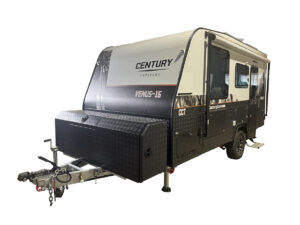
This is where comparing a structured range can help. The Century Caravans Venus range, for example, gives buyers different answers to the same question.
A compact model like the Venus 11 Plus suits buyers who want a small, self-contained on-road caravan for two people. The Venus 13 adds dedicated twin beds and stronger touring capacity while staying compact. The Venus 14 brings fixed-bed comfort and a separate shower and toilet. The Venus 16 creates a balanced couples’ touring setup with on-road and off-road options. The Venus 19 offers more space, more water and stronger off-grid capability for travellers who want a larger home-base feel.
None of these is the right caravan for everyone. That is the point. The best choice depends on what you want your caravan to do.
A practical inspection checklist before you buy
Before committing to any caravan, take your time and inspect it properly.
Check the weights and make sure your tow vehicle is suitable. Step through the layout as if you were using it on a wet day. Open every cupboard, hatch and door. Check the bed, bathroom, kitchen, fridge, storage and access points. Look underneath at the chassis, suspension and protection. Inspect seals, windows, roof joins and hatches for signs of water ingress.
Ask about inclusions, warranties, servicing requirements and final build specifications. If buying used, consider an independent inspection.
The goal is not to find a perfect caravan. The goal is to avoid buying the wrong caravan for the wrong reasons.
FAQ
What caravans should I avoid buying?
Avoid caravans that do not match your tow vehicle, have very limited payload, show signs of water damage, lack clear specifications or use rugged styling without genuine touring capability. Also avoid layouts that do not suit your daily routine.
Is it better to buy a smaller caravan?
A smaller caravan can be easier to tow, store and manoeuvre, but it is only better if the layout suits your comfort needs. If you want more storage, a permanent bed or a larger ensuite, a slightly bigger caravan may be more enjoyable.
Are off-road caravans always better?
No. Off-road caravans are better if you need the capability. If most of your travel is on sealed roads and established routes, an on-road caravan may be better value and easier to match to your needs.
What is the biggest red flag when buying a used caravan?
Water damage is one of the biggest red flags. Look for soft floors, musty smells, staining, swelling, bubbling panels and evidence of leaks around windows, roof joins, corners and hatches.
Should I avoid caravans with low payload?
Be cautious. Low payload can limit what you can legally and safely carry, especially if you travel with water, tools, accessories and off-grid equipment.
How do I know if a caravan is good quality?
Look beyond finishes. Check chassis, suspension, sealing, cabinetry, plumbing, electrical systems, appliance quality, service access, warranty support and whether the specifications are clear and consistent.
Final takeaway
The caravans to avoid are not always the cheapest, biggest, smallest or most rugged-looking. They are the caravans that do not fit your real life.
A good caravan should match your tow vehicle, your travel style, your comfort needs and your ownership budget. It should have enough payload, a practical layout, clear specifications and the right level of capability for the roads and campsites you actually plan to use.
Before buying, slow down and compare carefully. If you are still exploring options, start by comparing the Century Caravans Venus range across compact, on-road and off-road builds, then request a quote for the model that best fits your travel plans.
Tags :
example, category, and, terms