




What Caravans Not to Buy in Australia: A Practical Buyer’s Checklist
The cost of a caravan in Australia can vary enormously. A compact on-road caravan for two people can sit in a very different price bracket from a large off-road touring caravan with lithium batteries, solar, a full ensuite, outside kitchen and heavy-duty running gear.
That is why the question “how much is a caravan?” rarely has one simple answer. The better question is: what kind of caravan are you buying, and what do you need it to do?
A caravan is not just a box on wheels. You are paying for size, structure, layout, appliances, water capacity, power systems, suspension, comfort, materials and the level of self-sufficiency you want on the road. A weekend caravan designed mostly for caravan parks will usually be priced differently from an off-road caravan built for unsealed roads and longer free-camping stays.
This guide breaks down what affects caravan pricing in Australia, why two caravans of similar length can cost different amounts, and how to compare value before you buy.
Why caravan prices vary so much
Caravan pricing is shaped by several layers. The first is size, but size is only the beginning.
A longer caravan usually costs more because it needs more materials, more internal fit-out and often a stronger towing foundation. But a shorter caravan with premium off-grid systems or off-road hardware can still cost more than a longer, simpler on-road model.
That is where many buyers get caught. They compare caravan length first, then wonder why the prices do not line up neatly. In reality, price usually reflects the full build: the chassis, suspension, electrical package, water system, bathroom, kitchen, appliances, storage, finishes and included equipment.
A good caravan price comparison is less about asking, “Which one is cheaper?” and more about asking, “Which one gives me the features I will genuinely use?”
The main price categories in Australia
As a broad guide, Australian caravan pricing often falls into several practical categories.
At the lower end, you will usually find smaller caravans, camper-style setups and compact models with simpler fit-outs. These may suit weekend travel, couples who pack light, or buyers who want the lowest possible entry point into self-contained touring.
In the middle of the market, you often see compact and mid-sized caravans with more complete touring comfort: better kitchens, ensuites, larger fridges, air conditioning, solar and lithium power, water storage and more durable construction.
At the higher end, prices increase with larger layouts, stronger off-road builds, premium appliances, larger battery and solar systems, independent suspension, greater water capacity, improved materials and more extensive included equipment.
There are also luxury and specialised off-road caravans that can sit well above standard touring prices. These are designed for buyers who want maximum comfort, extended self-sufficiency or a very specific travel style.
The important point is that “caravan” covers a wide market. A small on-road caravan, a family bunk van and a long-range off-road caravan are not really competing on the same feature set.
New vs used: what changes the price?
Used caravans can appear much cheaper upfront, and for some buyers they are a smart option. But the purchase price only tells part of the story.
A used caravan may need new tyres, updated batteries, resealing, appliance repairs, water system work, brake servicing, suspension checks or cosmetic repairs. It may also have hidden issues such as water ingress, poor maintenance history or outdated electrical systems.
A new caravan usually costs more upfront, but it offers a clearer specification, current components, a manufacturer/dealer support pathway and the chance to choose a layout that suits you from the start.
Neither option is automatically better. The right choice depends on your budget, mechanical confidence and how much risk you are prepared to take on. If you are buying used, an independent inspection can be one of the best investments you make.
What makes a caravan more expensive?
The obvious answer is “more features”, but it helps to understand which features actually drive cost.
Size and layout
A larger caravan usually means more structure, more cabinetry, more flooring, more wiring, more plumbing and more internal equipment. Family layouts, larger ensuites, island beds and bigger kitchens all require space and materials.
But layout complexity also matters. A compact caravan that manages to include a proper ensuite, practical kitchen and clever storage may require very efficient design, even if the body length is modest.
On-road vs off-road build
Off-road caravans often cost more than on-road caravans of a similar size because they may include stronger foundations, upgraded suspension, better clearance, off-road couplings, underbody protection and extra durability features.
That does not mean every buyer needs an off-road caravan. If most of your travel is on sealed roads, caravan parks and established touring routes, an on-road build may be the better value. If you want to take unsealed roads, free camp more often and travel more confidently through varied conditions, the extra cost of an off-road setup may make sense.
The value is not in the label. It is in whether the build matches the roads you actually want to take.
Power and off-grid systems
Modern caravans can include solar panels, lithium batteries, inverters, power management systems and 12V appliances that allow you to camp comfortably away from powered sites.
These systems add convenience and freedom, but they also add cost. A caravan with a larger lithium battery bank, bigger solar capacity and a strong inverter package will generally cost more than a simpler park-focused setup.
If you rarely free camp, you may not need the most advanced off-grid system. If you plan to stay away from powered sites regularly, that investment can completely change how enjoyable the caravan is to use.
Water capacity and plumbing
Fresh water tanks, grey water tanks, hot water systems, pumps, showers and toilets all affect price. A caravan with an ensuite is more complex than one without because it needs more plumbing, ventilation and water management.
Water capacity also affects touring comfort. More litres can give you more independence, but it adds weight and may increase the cost of the build.
Appliances and included equipment
Fridges, cooking appliances, air conditioning, microwaves, hot water systems, reverse cameras, entertainment systems, awnings and outside kitchens all add to the final price.
This is why two caravans that look similar from the outside may be priced very differently once you compare the included equipment.
Build quality and after-sales support
A cheaper caravan is not necessarily bad, and a more expensive caravan is not automatically better. But build quality matters because caravans are exposed to vibration, heat, rain, dust, towing movement and frequent setup.
Good sealing, secure cabinetry, accessible service points, reliable appliances and sensible design can reduce frustration over time. After-sales support also matters because every caravan needs maintenance and occasional adjustment.
How much should you budget beyond the purchase price?
The purchase price is only the starting point. Before buying, it is worth thinking through the ongoing ownership costs as well.
Common additional costs include:
- registration
- insurance
- storage, if you cannot store the caravan at home
- servicing and maintenance
- tyres
- accessories
- towing equipment
- brake controller, mirrors or vehicle upgrades if needed
- campsite fees and travel costs
Some costs are small and occasional. Others can affect the yearly budget more noticeably. Insurance is especially worth checking before purchase because the premium can vary depending on the caravan’s value, storage location, usage, accessories and whether it is an on-road or off-road build.
This is why it is sensible to request insurance estimates while you are still comparing models, not after you have already decided.
A practical way to compare caravan value
When you compare caravans, try not to focus on price alone. A cheaper model may cost less because it has fewer included features, lower off-grid capability, smaller water capacity or lighter-duty running gear. A more expensive model may offer equipment you genuinely need, or it may include extras you will rarely use.
A better comparison is to ask:
- What size suits the way we travel?
- Do we need an ensuite?
- Do we mostly use caravan parks, free camping or a mix?
- Do we need on-road or off-road capability?
- How much power and water do we realistically need?
- What tow vehicle are we using?
- What is included as standard?
- What will need to be added later?
- What are the likely ongoing costs?
The best value caravan is not always the cheapest. It is the one that gives you the right travel experience without paying for features that do not match your use.
How Century Caravans fits into the price conversation
Century Caravans sits in the market with a focus on practical, self-contained touring caravans across compact and mid-sized layouts. That makes the range useful for buyers who are trying to understand how price changes as caravans become larger, more comfortable or more capable.
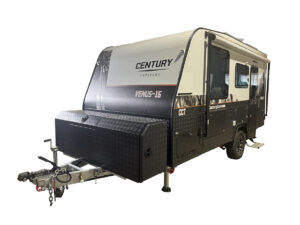
For example, the compact Venus models show how smaller caravans can still include proper touring features. The Venus 11 Plus is an 11ft on-road caravan for two people with a private ensuite, indoor kitchen, lithium battery and solar support. It is designed for buyers who want a very manageable footprint while still having the essentials for self-contained travel.
The Venus 13 steps up slightly in size and touring capacity, with twin single beds, an in-built ensuite, larger water capacity and a stronger off-grid power setup. For buyers who want more day-to-day comfort without moving into a large van, this type of layout can make sense.
The Venus 14 moves further toward fixed-bed comfort, with a queen-size bed, separate toilet and shower, induction cooking, generous water capacity and solar/lithium support. It remains compact compared with many full-size caravans but offers a more residential feel than smaller layouts.
Further up the range, the Venus 16 On Road and Venus 19 On Road models introduce more space, island bed layouts, larger appliances, stronger power systems and on-road/off-road choices. This is where the price conversation becomes less about “small vs large” and more about how much capability and comfort you want built in from day one.
As a current product-sheet guide, Century’s Venus range sits from the compact Venus 11 Plus at $33,990 AUD RRP through to the Venus 19 Off Road at $72,999 AUD RRP. Prices may change, and optional upgrades and on-road costs are not included, so final pricing should always be confirmed with the dealer.
On-road vs off-road: where the extra money goes
One of the most common pricing questions is whether an off-road caravan is worth the extra cost.
The answer depends on how you travel.
If you mostly stay on sealed roads and established caravan parks, an on-road caravan may give you better value because your money goes into comfort and everyday touring features rather than heavier-duty off-road hardware.
If you plan to explore unsealed roads, travel through rougher regional conditions or spend more time away from powered sites, an off-road build may justify the higher price. The extra cost often reflects stronger foundations, more capable suspension, off-road couplings and support systems that make mixed-road touring more comfortable.
This is why buyers should compare on-road and off-road builds based on intended use, not just appearance. A caravan should match the roads you actually plan to take.
Should you buy the caravan you can afford now, or wait for the one you really want?
This is a common decision. A lower-priced caravan can get you travelling sooner, but if it lacks the features you need, you may end up spending more on upgrades, or wanting to change vans sooner than expected.
On the other hand, waiting for the “perfect” caravan can delay travel unnecessarily, especially if your needs are simple and a compact model already suits your lifestyle.
The best middle ground is to separate must-haves from nice-to-haves.
Must-haves might include a toilet and shower, a certain towing limit, an on-road or off-road foundation, enough beds, or enough power and water for your travel style.
Nice-to-haves might include premium finishes, extra entertainment features, larger appliances or additional storage zones that would be useful but not essential.
Once you know the difference, the price comparison becomes much clearer.
FAQ
How much does a caravan cost in Australia?
Caravan prices in Australia vary widely depending on size, age, build type, features and off-road capability. Compact new caravans may start in the tens of thousands, while larger and more premium off-road caravans can cost significantly more.
Are small caravans cheaper?
Often, but not always. A small caravan with a high-quality fit-out, ensuite, lithium battery, solar, air conditioning and strong touring features may cost more than a larger but simpler caravan.
Why are off-road caravans more expensive?
Off-road caravans may include stronger chassis components, upgraded suspension, off-road couplings, better clearance, underbody protection and off-grid support. These features add cost but may be worthwhile for mixed-road touring.
Should I buy new or used?
A new caravan gives you a clearer specification and support pathway, while a used caravan may cost less upfront. Used buyers should pay close attention to water damage, servicing history, tyres, brakes, batteries, appliances and signs of poor maintenance.
What extra costs should I budget for after buying a caravan?
Common ongoing costs include insurance, registration, storage, servicing, tyres, towing accessories, campsite fees and maintenance. Some buyers may also need tow mirrors, a brake controller or vehicle upgrades.
Is a more expensive caravan always better?
No. A more expensive caravan may include features you do not need. The best value is the caravan that suits your travel style, tow vehicle, comfort expectations and budget.
Final takeaway
The price of a caravan in Australia depends on much more than length. Size matters, but so do layout, build quality, off-grid capability, water systems, appliances, towing requirements and whether the caravan is designed for on-road or off-road travel.
If you are comparing models, start with the way you want to travel. A compact on-road caravan may be the smartest value for weekend escapes and established touring routes. A larger off-road model may be worth the extra investment if you want more self-sufficiency, more comfort and the ability to travel further from powered sites.
For a practical starting point, compare the Century Caravans Venus range across compact, on-road and off-road builds. Then request a quote based on the layout and specification that best matches your travel plans.