




What Caravans Not to Buy in Australia: A Practical Buyer’s Checklist
A hybrid caravan is best understood as a response to a very common Australian travel problem: you want the freedom of a camper trailer, the ability to pull off the highway for lunch, spend a night off-grid, and keep moving without fuss, but you also want the comfort that makes touring genuinely enjoyable for more than a weekend.
That’s where the “hybrid” part comes in. A hybrid caravan sits between a camper trailer and a full-size caravan. It’s designed to combine two worlds: the practicality of outdoor touring (often including off-grid capability and more rugged build features) with the everyday comfort of a solid, self-contained caravan (a hard cabin, a proper bed, a real kitchen, and often a shower and toilet).
In Australia, the meaning can shift depending on who you ask. Some travellers use “hybrid” to describe hard-top camper-style builds with fold-out sections. Others use the term to describe compact off-road-capable caravans built for touring beyond sealed roads, without giving up the comfort that makes longer trips feel easy. That second interpretation is exactly where Century Caravans sits. We build off-road caravans that deliver a hybrid-style balance: the freedom to roam, the confidence to tow through mixed conditions, and the comfort to actually enjoy the destination when you get there.
Key hybrid caravan traits (quick checklist)
Hybrid caravans usually share a handful of traits that make them feel “in between” a camper and a full caravan. These features are less about hype and more about how you travel day-to-day: quick stops, mixed roads, and the ability to camp without plugging in every night.
- Hard-top body with caravan-style interior comfort
- Off-road capable chassis & running gear (clearance, suspension, coupling)
- Off-grid power (solar + lithium + inverter-style setups)
- Outdoor-friendly features (often outside kitchen / quick camp usability)
- Compact, touring-friendly footprint vs many full-size vans
Table of Contents
What makes a caravan “hybrid”?
The simplest way to understand a hybrid caravan is to look at what it borrows from each side of the market. Most hybrids exist because travellers want more comfort than a camper trailer, but don’t necessarily want the bulk or park-only lifestyle that can come with larger vans.
1) The “camper” side (touring practicality + outdoor living)
Hybrid-style caravans often match the way Australians actually travel: quick roadside lunches, free-camping nights, and long touring loops where you might not see a powered site for a while. That’s why they often include features that support an “outside-first” lifestyle.
- Rugged touring setup for mixed road conditions
- Outdoor living features that suit quick stops
- Off-grid focus (battery, solar, water)
- Practical layouts that don’t require a long setup time
2) The “caravan” side (real comfort, all-weather usability)
Where hybrids pull ahead of basic camper setups is the “every day” comfort: sleeping well, showering properly, keeping food cold, and having a secure cabin in wind and rain. This is the part that makes longer trips genuinely enjoyable.
- Solid walls and a more secure cabin feel
- A proper bed (commonly island bed layouts)
- A full kitchen
- Often a shower + toilet ensuite
- Better weather protection for longer touring windows
In practice: a good hybrid caravan lets you tour like a camper… but live like you brought a small apartment with you.
Hybrid caravan vs camper trailer vs full caravan
When people search for “hybrid caravan”, they’re usually trying to avoid extremes. A camper trailer can be brilliant, but it often comes with more setup effort, more exposure to weather, and fewer everyday comforts. A full-size caravan can be incredibly comfortable, but the trade-off can be bulk, towing requirements, and sometimes a travel style that leans more towards caravan parks and sealed roads.
A hybrid sits in the middle. It usually aims for quicker setup than a camper trailer while keeping a hard, secure cabin. And it aims to be more compact and touring-friendly than a big van, while still delivering the fundamentals: sleeping well, eating properly, and staying comfortable when the weather turns.
If your goal is mixed-road touring plus real comfort, hybrids often feel like the “sweet spot”.
Here’s the comparison that matters in the real world: setup time, comfort, off-grid support, and whether you’ll still enjoy it after day 12 on the road.
| Feature | Camper Trailer | Hybrid Caravan | Full Caravan |
|---|---|---|---|
| Setup time | Often longer | Usually quicker | Quick |
| Weather protection | Variable | Strong | Strong |
| Comfort level | Basic → mid | Mid → high | High |
| Bathroom options | Rare | Often available | Often available |
| Off-road readiness | Common | Common | Varies by model |
| Footprint/size | Small | Compact-mid | Mid-large |
| Off-grid focus | Common | Very common | Optional |
If your goal is off-road touring + real comfort, hybrids are often the “sweet spot.”
Are hybrid caravans off-road?
Some are, but it’s important to be clear: “hybrid” doesn’t automatically mean off-road capable. In Australia, the term is often used as if it does, because so many hybrids are marketed for adventure touring. But the reality is more nuanced.
Off-road capability isn’t a badge; it’s engineering. It comes down to the foundation components working together: the chassis and drawbar design, suspension quality, ground clearance, underbody protection, coupling articulation, and the little details that matter after repeated days of dust and vibration, like sealing, hatches, and how storage is built.
If you’re comparing two “hybrid” vans, it’s worth resisting the temptation to start with cushions and colours. What you want to know is whether it’s designed for the roads you actually plan to tow: corrugations, gravel, regional backroads, and those stretches that aren’t perfectly maintained but lead to the best campsites.
What makes a hybrid caravan genuinely off-road capable?
If you’re comparing models, this is where you want to focus first (before you get distracted by cushions and colours).
- Chassis strength and design
- Suspension type and component quality
- Ground clearance and underbody protection
- Coupling designed for articulation
- Dust sealing and touring durability features
Pros and cons of hybrid caravans
Hybrid caravans are popular because they’re built around a very specific promise: more freedom than a park-only caravan, without sacrificing the comfort that makes touring sustainable. But like any category, there are trade-offs — and the best choice depends on how and where you’ll actually travel.
Why people love hybrid caravans
These benefits show up quickly on the road: fewer compromises, easier touring rhythms, and more “yes” destinations on the map.
- Comfort without the bulk: often easier to manage than many full-size vans
- Off-grid ready: solar + lithium style setups suit free camping
- Outdoor lifestyle: practical for quick stops, touring loops, national parks
- All-weather touring: hard-top body feels more secure than soft setups
- Balanced layouts: many include an ensuite without needing a huge footprint
Trade-offs to be aware of
These aren’t deal-breakers; they’re the things smart buyers plan for early.
- Still a caravan: weight and towing requirements matter
- Not all hybrids are equally off-road: running gear and sealing make the difference
- Compact means efficient, not endless: storage and bench space are well designed, but finite
- Options can add up: batteries/solar/electronics affect price and weights
Who is a hybrid caravan best for?
Hybrid caravans suit travellers who want a mix of comfort and capability, which is the type of trip where you might spend one night in a caravan park, then three nights free camping, then tow through unsealed roads to reach the next scenic base.
They’re especially popular with couples because you can keep a comfortable interior (bed, bathroom, kitchen) while still travelling light enough to feel nimble.
A hybrid caravan is a great fit if you:
If these sound like your travel patterns, you’re exactly the audience hybrids were made for.
- Do weekends away, but also want longer touring options
- Prefer free camping (or mixed park + off-grid travel)
- Want an ensuite without needing a huge van
- Like an outside cooking routine
- Travel as a couple (or small family depending on layout)
- Want off-road confidence for touring routes and unsealed roads
You might prefer a different style if you:
If your top priority is maximum interior space and lounge time, a larger on-road caravan might suit you better.
- Mostly stay in powered parks and want the biggest possible living zones
- Need large family bunk layouts and oversized lounges
- Plan a very extreme terrain where you’d choose a specialist setup
What to look for in a hybrid caravan (buyer checklist)
If you want to buy well, think in layers. Start with the foundation (chassis/suspension/coupling), then confirm the touring systems (power and water), then check the daily livability (kitchen, bathroom, storage). Most regrets happen when buyers do this in the opposite order.
1) Chassis, drawbar and suspension (the foundation)
This is the “can it tour for years?” category. You’re not just buying a holiday vehicle. You’re buying a structure that will handle vibration, movement, and varied road conditions.
- Strong chassis and drawbar design
- Quality off-road suspension and proven components
- A coupling designed for safe off-road articulation
2) Off-grid power system (how you free camp comfortably)
A hybrid caravan’s promise falls apart fast if the power system can’t support your real usage. Think beyond “it has solar”. You’re looking for a system that supports fridges, lights, charging, fans, and the way you camp.
- Solar capacity that matches your travel style
- Battery capacity (Ah) and chemistry (lithium vs AGM)
- Inverter capability (if you want 240V away from mains)
- A power management system that protects and controls the setup
3) Water capacity (and how practical it is to use)
Water is freedom, but only if it’s easy to monitor, refill, and maintain. Practical plumbing and thoughtful tank choices matter just as much as litres on paper.
- Fresh water capacity suited to your typical trip length
- Grey water where required/needed
- Easy access for servicing (pumps, taps, filters, drains)
4) Kitchen layout (inside + outside)
Hybrid-style travel often includes quick roadside stops and outdoor cooking, but you still want a reliable inside option for bad weather or late-night meals.
- Internal cooking setup for all-weather convenience
- External kitchen for the classic Aussie touring routine
- Bench/storage design that makes real cooking doable
5) Dust sealing + storage + touring durability
On unsealed roads, “nice finishes” don’t matter if dust gets in, and storage is frustrating. This is where build quality turns into everyday comfort.
- Good seals, hatches, and dust management
- External storage that’s usable (not just present)
- Fit-out designed for touring (secure fittings, sensible access)
6) The comfort features you’ll notice every day
Comfort isn’t just luxury. It’s what makes you want to keep travelling. These are the features that separate “fun weekend” from “happy long trip.”
- Bed access and sleeping comfort
- Ventilation and airflow
- Climate comfort (especially for summer touring)
- Hot water and bathroom usability
- Storage and movement space that fits your habits
Century examples: hybrid-style off-road caravans
If your idea of a “hybrid caravan” is off-road ready with real comfort, these off-road models match that intent: compact touring size, proper internal living, and off-grid support designed for Australian travel.
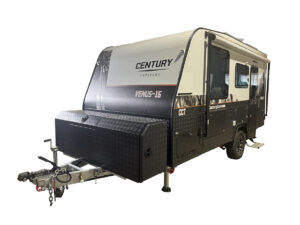
Venus 16 (Off Road) — compact hybrid touring for two
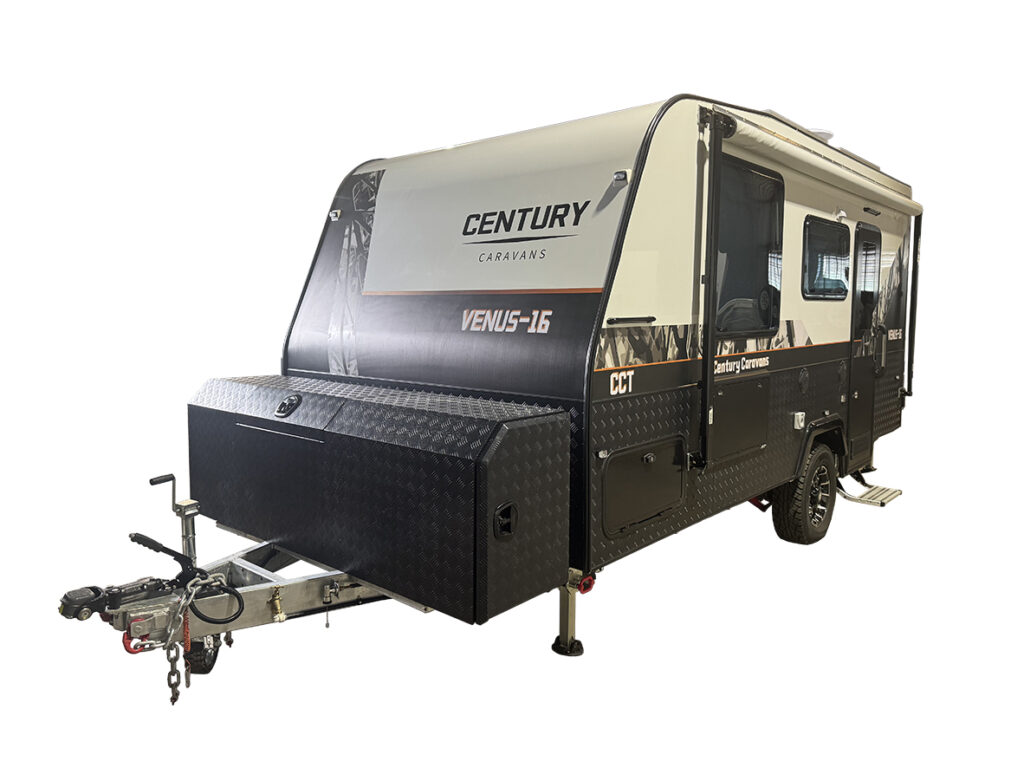
This is a strong example of “hybrid” value: a manageable 16ft footprint that still feels like a real caravan inside. The Venus 16 Off Road Caravan is built for couples who want to travel comfortably, stop often, and spend more time free camping without feeling like they’ve downsized their lifestyle.
You get the core daily comforts – bed, ensuite, kitchen – plus the practical off-grid support that makes longer touring routes easier.
- 2 berth island bed layout
- Full ensuite with shower + toilet
- Off-grid support: 2000W inverter + 200Ah lithium + 400W solar
- Kitchen flexibility: Thetford Mini Grill (4 burner) inside + 3-burner outside kitchen
- Touring conveniences like quality appliances and a practical fit-out
(Specs can vary by build; confirm final specification with your dealer.)
Venus 19 (Off Road) — bigger comfort + stronger off-grid support
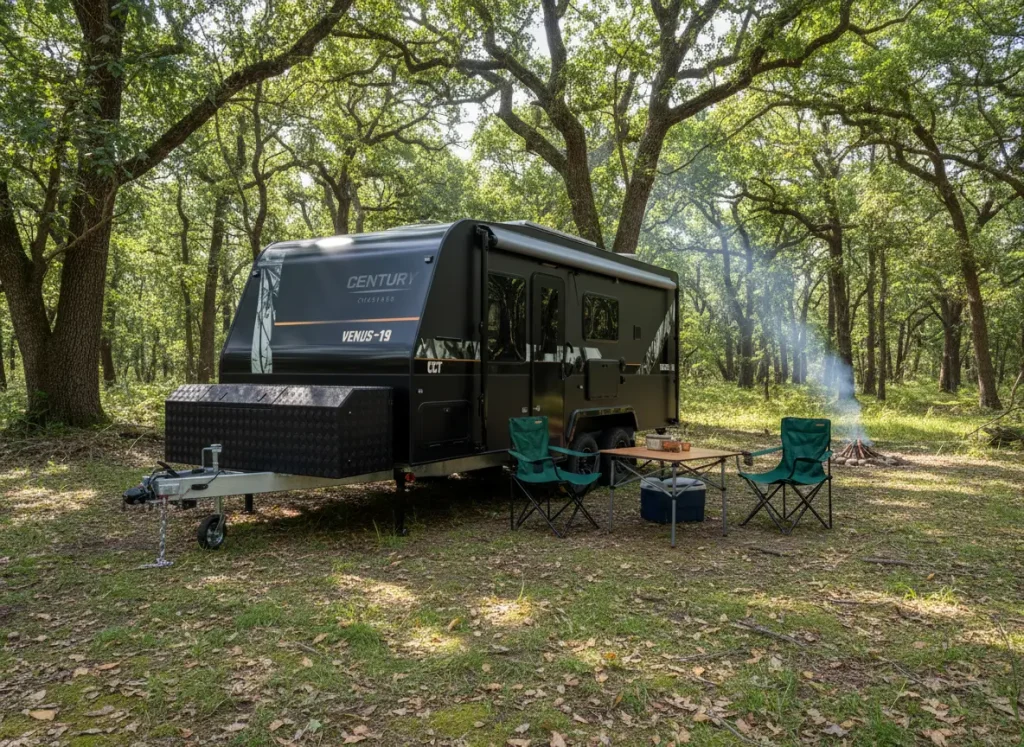
The Venus 19 Off Road is for travellers who want a more “home base” feel while still touring confidently. It leans into the hybrid promise: extended off-grid support, generous water capacity, and trusted off-road components without losing the comfort features that make longer trips enjoyable.
- Off-grid package: Projecta power management + 2000W inverter + 400Ah lithium + 600W solar
- Water capacity: 225L fresh + 75L grey
- Off-road hardware: Cruisemaster DO35 coupling + independent suspension
- Island bed + full ensuite
- Kitchen flexibility: Thetford Mini Grill (4 burner) inside + 3-burner outside kitchen
(Specs can vary by build; confirm final specification with your dealer.)
FAQ
Is a hybrid caravan the same as an off-road caravan?
Not always, but in Australia, the term “hybrid caravan” is often used to describe compact, off-road-capable caravans that blend outdoor practicality with full internal comfort.
Do hybrid caravans have a toilet and shower?
Many do. A key reason people choose hybrids is to get a proper ensuite while staying in a more compact touring footprint.
Are hybrid caravans easier to tow?
They can be, mainly because many are smaller and more compact than large vans. But towing depends on the caravan’s weight, your tow vehicle’s ratings, and how you load it.
What makes a hybrid caravan good for free camping?
A solid hybrid setup usually includes solar, lithium battery capacity, inverter capability, water storage, and practical outdoor living features like outside cooking.
What should I check before buying a hybrid caravan?
Start with the foundations: chassis, suspension, coupling and sealing. Then confirm the off-grid system, water capacity, and whether the layout suits your travel style.
Are hybrid caravans suitable for long trips?
Yes, many are built exactly for that. The hybrid concept works well for touring because it balances comfort, practicality, and off-grid support.
Looking for a hybrid caravan that’s genuinely off-road touring ready?
If you like the idea of a hybrid caravan that is off-road capable, hard-top comfort, and set up for free camping, explore our off-road range or talk to our team about the right size and layout for your travel plans.
- Explore: Venus 16 Off Road Caravan
- Explore: Venus 19 Off Road Caravan