






What Caravans Not to Buy in Australia: A Practical Buyer’s Checklist
A 16 foot off road caravan is appealing for a simple reason: it promises freedom without becoming oversized. You get the comfort of a proper caravan — a bed, kitchen, ensuite and hard-walled cabin — while keeping the footprint compact enough for touring, reversing, parking and accessing more varied destinations.
But “off road” is one of the most overused phrases in the caravan market. Sometimes it means genuinely built for rougher touring. Sometimes it means a tougher-looking finish, checker plate, larger tyres and a marketing badge.
A good 16ft off road caravan is not just a smaller caravan with rugged styling. It should be built from the ground up to handle mixed-road touring: unsealed roads, corrugations, dust, vibration, uneven campsites and longer stretches away from powered sites. In Australia, where a great campsite might sit at the end of a gravel road, that capability can completely change how confidently you travel.
Why 16ft is such a practical size for off road touring
The appeal of a 16ft off road caravan is the balance. Larger off road vans can feel incredibly comfortable once you’re set up, but they can also demand more from the tow vehicle, the driver and the campsite. Smaller campers can be nimble and capable, but they often ask you to give up internal comfort.
Sixteen feet sits in the middle. It is compact enough to feel more manageable on the road, but still large enough to include the features many couples want for longer trips: a proper sleeping area, internal cooking options, storage, and often a full ensuite.
That last point is important. A 16ft off road caravan is not only about getting somewhere remote. It is about enjoying the place once you arrive. The more self-contained the van is, the less you need to rely on facilities, which is exactly why buyers often search for a 16ft off road caravan with an ensuite.
“Off road” starts with the foundation
If you want to know whether a caravan is genuinely off road capable, start underneath it.
The foundation tells you more than the interior styling ever will. A beautiful fit-out is nice, but on rougher roads, the chassis, suspension, coupling and underbody design are doing the real work. They decide how the van handles vibration, articulation, uneven ground and repeated impacts over time.
A serious off road caravan should be designed with touring stress in mind. That means the structure is not just strong on paper, but suited to the kind of movement a caravan experiences on imperfect roads. Corrugations, for example, are not dramatic in the moment, they are repetitive. That constant vibration is what tests build quality.
So when you compare 16ft off road caravans, look past the colour scheme and ask a more practical question: what has been built into the van to help it survive and feel stable over years of touring?
Suspension: the part you feel even when you don’t think about it
Suspension is one of the clearest differences between an on-road caravan and a true off road touring caravan.
On smoother roads, suspension comfort can feel subtle. On rougher surfaces, it becomes obvious. Good suspension helps the caravan track more calmly, reduces harshness, and helps protect the structure and interior fit-out from constant vibration.
This does not mean every off road van needs the same suspension system, but it does mean you should understand what you are buying. The question is not just “does it have off road suspension?” The better question is: is the suspension suited to the weight, intended use and touring style of the caravan?
For a 16ft van, this balance is especially important because the goal is usually to stay capable without making the caravan feel unnecessarily heavy or overbuilt for the way you actually travel.
Coupling and articulation matter more than many buyers realise
A standard coupling may be fine for ordinary road use, but off road touring often involves uneven ground, angled driveways, dips, tracks and campsites where the car and caravan are not sitting perfectly level. That is where articulation matters.
An off road coupling is designed to allow more movement between the tow vehicle and caravan. It gives the combination more flexibility when the ground is uneven, which can reduce stress on the connection and make manoeuvring more confidence-inspiring.
If you plan to tow only on highways and sealed caravan park roads, this may not be a priority. But if you are specifically looking for a 16 foot off road caravan, the coupling should be part of the conversation and not an afterthought.
Ground clearance and underbody protection
Clearance is not just about looking tall. It affects how comfortably the caravan handles uneven roads, dips, entries, exits and rougher campsites.
A van with poor clearance can scrape or feel vulnerable, whereas a better-designed off road setup feels composed. Underbody protection also matters because tanks, plumbing and wiring are exposed to harsher conditions when you leave sealed roads.
For buyers, the practical question is not “can this van go anywhere?” No caravan can. The better question is: does it have the clearance and protection for the kind of roads I realistically want to travel?
That distinction keeps your expectations sensible. A 16ft off road caravan is ideal for touring rougher roads and reaching more remote camps, but it is still a caravan, not a rock-crawling 4WD trailer.
Dust sealing: the invisible feature you will absolutely notice
Dust sealing is one of those things buyers often underestimate until their first long gravel-road trip.
On-road, it is easy to focus on the exciting features: the kitchen, ensuite, solar, batteries and bed layout. But on unsealed roads, dust has a way of finding every weak point. Poor sealing can turn a beautiful interior into a frustrating clean-up job after every drive.
Good dust management comes from details: seals, hatches, vents, storage design and overall build quality. It is not always obvious in photos, which is why it is worth asking direct questions when comparing vans.
If you are choosing a 16ft off road caravan for Australian touring, dust sealing is not a minor feature. It is part of daily comfort.
Off-grid capability is part of the off road experience
A 16ft off road caravan is rarely just about the road surface. It is about the kind of travel that road surface leads to.
If you are towing to places without powered sites, you need systems that support self-sufficient travel: battery capacity, solar input, inverter capability, water storage, hot water and practical cooking options.
This is where the word “off road” overlaps with “off-grid”. They are not the same thing, but they often go together. A caravan might be able to handle a gravel road, but if it cannot support you comfortably once you arrive, the experience still feels limited.
For many couples, the ideal setup is not extreme. It is simply enough power and water to make free camping feel relaxed rather than rationed.
Weight still matters in a 16ft off road caravan
One of the advantages of a 16ft caravan is manageability, but off road features can add weight. Stronger foundations, larger power systems, extra water capacity and accessories all affect the numbers.
That does not mean off road vans are automatically “too heavy”. It just means you should pay attention to the same towing fundamentals you would with any caravan: ATM, payload, towball weight, vehicle payload, rear axle load and GCM.
The goal is not to buy the biggest or toughest van possible. The goal is to buy the van that matches your travel style and tow vehicle comfortably. A well-matched 16ft off road caravan can feel far more enjoyable than a larger van that constantly has you thinking about limits.
What a 16ft off road caravan is best suited for
A 16ft off road caravan suits travellers who want more freedom than a sealed-road touring van, but still want the comfort of a proper caravan.
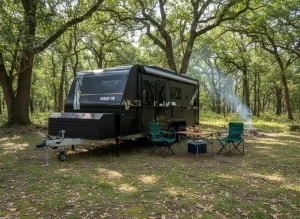
It is usually a strong fit for couples who like the idea of mixed travel: a few nights in a caravan park, a few nights free camping, unsealed roads when needed, and enough onboard comfort to make longer trips feel easy.
It is less ideal if your goal is maximum indoor living space, large family bunk layouts or extreme terrain. In those cases, another style may suit you better. But for couples wanting a compact, capable touring van, 16ft can be a very sensible size.
How Century Caravans fits into the 16ft off road conversation
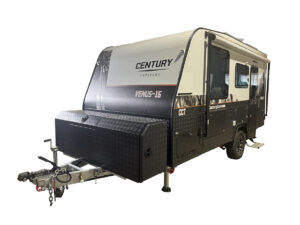
This is exactly where the Century Caravans Venus 16 Off Road naturally belongs. It is designed for travellers who like the compact feel of a 16ft caravan, but want more confidence for mixed-road touring than a standard on-road setup offers.
The appeal is not just that it is “off road”. It is the combination that matters: a manageable footprint, internal comfort, ensuite convenience and touring-focused hardware that supports the way many Australians actually travel.
For buyers comparing the broader 16ft category, it is also worth looking at the difference between the Venus 16 On Road and Venus 16 Off Road. The on-road model may suit travellers who mostly stay on sealed roads and established routes. The off-road model is the more natural fit if your plans include unsealed roads, more remote campsites and a stronger touring foundation.
That comparison is often the real decision: not “do I need the toughest caravan possible?” but which version matches the roads I actually want to take?
What to check before buying a 16ft off road caravan
Once you are seriously comparing models, try to inspect the van in this order.
Start underneath. Look at the chassis, suspension, coupling, clearance and underbody protection. These features shape the off road capability more than the interior styling.
Then look at sealing and storage. Ask how the van handles dust, how external hatches seal, and whether the storage is practical for touring gear.
After that, look at the off-grid systems. Battery, solar, water and cooking options should match your real travel style. If you only free camp occasionally, you may not need the most extreme setup. If you plan to stay off-grid often, these systems become central to comfort.
Finally, step inside and judge livability. A good 16ft layout should feel efficient, not cramped. The bed, kitchen and ensuite should work for the way you move through the van every day.
FAQ
Is a 16 foot off road caravan big enough for long trips?
For many couples, yes. A well-designed 16ft off road caravan can include the key comforts needed for longer touring, including a proper bed, kitchen, ensuite and off-grid support.
Is a 16ft off road caravan easier to tow than a larger off road caravan?
Often, yes. A shorter footprint can feel more manageable when reversing, parking and manoeuvring. However, towability still depends on weight, towball load, tow vehicle limits and how the caravan is packed.
Does “off road caravan” mean it can go anywhere?
No. Off road caravans are designed for rougher touring conditions, not extreme 4WD tracks. Always match the caravan to the road conditions, your tow vehicle and your experience level.
What makes a caravan genuinely off road capable?
The main factors are chassis strength, suspension quality, coupling articulation, ground clearance, underbody protection, dust sealing and overall touring durability.
Should I choose a 16ft on-road or off-road caravan?
Choose on-road if most of your travel is sealed roads and established caravan parks. Choose off-road if you want more confidence on unsealed roads, rougher campsites and mixed touring routes.
A practical next step
If you are searching for a 16 foot off road caravan, the smartest approach is to compare beyond the label. Look at the foundation, the towing numbers, the off-grid systems and the daily comfort.
A good off road caravan should not just look tough. It should make touring feel calmer, more flexible and more enjoyable.
For a real-world example in this size category, compare the Century Caravans Venus 16 Off Road with the Venus 16 On Road and ask one simple question: which one matches the roads you actually want to travel?