



What Caravans Not to Buy in Australia: A Practical Buyer’s Checklist
A 16 foot caravan with an ensuite sounds like the best of both worlds: compact enough to tow and park without drama, but comfortable enough that you’re not planning every day around amenities blocks.
And for a lot of Australian travellers, that’s exactly why 16ft has become such a popular size. It sits in a “sweet spot” where you can still get the essentials — a proper bed, a functional kitchen, and an internal shower and toilet — without stepping up into the bulk and towing demands of larger vans.
The important thing to know is this: an ensuite in a 16ft caravan can feel genuinely comfortable, but it’s always a design exercise. There are trade-offs, and the best choice depends less on a brochure photo and more on how you’ll actually travel.
This guide explains what a 16ft ensuite setup feels like day-to-day, what layouts work best, and what to look for before you buy.
Why people want an ensuite in a 16ft caravan
An ensuite isn’t just a “luxury add-on” once you start touring more often. It changes how you plan your trips.
With a toilet and shower onboard, you can:
- free camp more comfortably
- stop for the night without hunting for facilities
- travel in shoulder seasons when amenities aren’t always open
- keep your routine simple (especially on longer trips)
For couples in particular, having an ensuite can be the difference between “a few weekends a year” and “we could do this for weeks”.
It also makes mixed-style travel easier. Many people love caravan parks occasionally — hot showers, laundry, powered sites — but they don’t want to be locked into parks for every stop. A compact ensuite setup gives you more flexibility without feeling like you’re towing a full-size apartment.
The big question: does an ensuite feel cramped in a 16ft caravan?
The honest answer is: it depends on the layout, and it depends on your expectations.
A 16ft ensuite won’t feel like a bathroom at home. But a well-designed one can still feel private, functional, and easy to use — particularly if it’s designed around real touring habits rather than showroom styling.
What usually determines whether it feels “tight” is not the presence of an ensuite. It’s what the ensuite displaces — and how well the rest of the van still flows around it.
In a compact caravan, space has to come from somewhere. The most common trade-offs are:
- slightly less open floor space in the main living area
- smaller wardrobes or overhead storage in some layouts
- tighter bench length (depending on kitchen design)
The good news is that 16ft is often big enough to avoid the worst of those compromises, especially for couples who value the ensuite more than a huge lounge.
Common 16ft ensuite layout styles (and how they feel on tour)
This is where buyers get clarity fast: not by comparing spec sheets, but by imagining daily movement inside the van.
Rear ensuite layouts: simple and private
A rear ensuite can feel like a neat “room” at one end of the caravan. Many people like it because it creates a sense of separation — you’re not brushing your teeth next to the kitchen.
On tour, the benefit is privacy and routine. The trade-off is often that the bed and kitchen need to work a little harder to share the remaining space efficiently.
Side ensuite layouts: often better flow in the living space
A side ensuite can sometimes create a better balance because it allows designers to protect the living “walkway” and keep the van feeling less segmented.
On tour, this can feel a little more open. The trade-off is that storage placement and bed access become more important, because everything is closer together.
Wet bath vs separate shower space
In many compact caravans, you’ll see a wet bath style setup (where the shower shares space with the rest of the bathroom). Some people love it because it’s simple and easy to clean. Others prefer a more “separate” feel.
There isn’t a universal “better” option. The practical question is: Does it work for how you use it? If you’re showering every day and you like to keep towels and toiletries dry, you’ll notice the difference more.
What makes a 16ft ensuite actually pleasant (the practical checks)
The best way to judge an ensuite isn’t by standing in it at a showroom for 10 seconds. It’s by thinking through a normal day.
Ventilation matters more than size
A compact bathroom with poor ventilation quickly feels damp, smells linger, and it becomes annoying to use. Good ventilation and airflow make a small ensuite feel far more comfortable.
Water storage and hot water shape your reality
An ensuite is only as useful as the system behind it. If you plan to free camp, your water storage and hot water setup matter as much as the layout.
Many touring couples find the “sweet spot” is having enough water to stay comfortable for a few days without making the caravan impractically heavy. It’s not about carrying the maximum litres; it’s about matching capacity to your touring rhythm.
Drainage and levelling are part of ensuite comfort
This sounds small, but it’s real: a caravan that isn’t level can make showers and sinks behave differently. Good levelling habits make ensuite life easier.
If you’re new to caravanning, learning to level quickly is one of those skills that pays off every single trip. (It’s also why so many experienced travellers treat levelling as a routine, not a fuss.)
Ease of access beats “fancy finishes”
In a compact ensuite, the little things matter: where the towel hooks are, how easy it is to move, whether you can reach storage without bumping elbows, and whether the door placement makes sense.
A clean, practical layout tends to beat a glamorous one once you’re on day 12 of a trip.
Towing reality: why 16ft is popular for couples
A big reason 16ft caravans with ensuites perform well in the market is that they often strike a nicer balance between comfort and towability.
They can be:
- easier to manoeuvre into sites
- less intimidating to reverse than longer vans
- more flexible for mixed travel (parks + free camping)
That said, “easier” doesn’t mean “automatic”. You still need to consider:
- ATM and payload
- towball weight
- how you load the caravan and vehicle
If you’re comparing 16ft options, it’s worth doing the simple checks early rather than falling in love with a layout and discovering later that your tow vehicle setup is tight.
A realistic way to choose the right 16ft ensuite caravan
If you’re trying to shortlist confidently, think in this order:
1. Do you want to free camp often, or mostly use powered sites?
Free camping puts more weight on water and power systems. Park-heavy travel puts more weight on interior space and lounge comfort.
2. What annoys you faster: limited bathroom space, or limited living space?
This sounds funny, but it’s the decision. In compact caravans, you’re always trading one kind of space for another.
3. Are you “outside” travellers or “inside” travellers?
If you cook outside, spend time under an awning, and keep moving, a 16ft ensuite can feel perfect. If you want long evenings inside with lots of lounge time, you may prefer going larger.
How Century Caravans fits into the 16ft ensuite conversation
The reason the 16ft size class works so well is that it can deliver what most touring couples actually want: a manageable footprint without giving up the daily comforts that make travel sustainable.
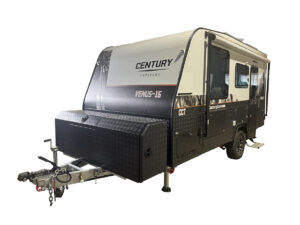
That’s also where the Century Caravans Venus 16 range sits. Both the Venus 16 On Road and Venus 16 Off Road are designed as compact touring caravans for two, with a full internal setup that includes the everyday essentials, including an ensuite, while keeping the overall size in the 16ft category.
The choice between on-road and off-road usually isn’t about “better”. It’s about where you plan to tow. If you’re mainly sticking to sealed roads and established touring routes, an on-road setup can make sense. If your touring involves more unsealed roads and you want the confidence of off-road-focused foundations, the off-road variant may be the better fit.
If you’re currently shortlisting, these are the two pages to compare:
- Venus 16 On Road (16ft touring comfort for couples)
- Venus 16 Off Road (16ft touring comfort with off-road capability)
FAQ: 16ft caravans with ensuite
Is a 16 foot caravan big enough for long trips?
For many couples, yes. A well-designed 16ft caravan can feel very livable because it includes the essentials (bed, kitchen, ensuite) without a large footprint. The key is choosing a layout that suits your habits.
Do 16ft caravans with ensuite have enough water for free camping?
It depends on the model and your usage. Many couples free camp comfortably by matching water capacity to their trip rhythm and refilling when needed rather than carrying maximum water all the time.
Are 16ft caravans easier to tow than larger vans?
Often, yes. They can be easier to manoeuvre, park, and reverse. But towing depends on your caravan’s weights and your tow vehicle’s limits, especially towball weight and payload.
Will an ensuite make the caravan feel smaller inside?
It can, but the best layouts manage the trade-off well. If having a bathroom onboard matters to you, most people find it’s worth the small reduction in open living space.
A calm next step
If you’re drawn to the idea of a 16 foot caravan with an ensuite, the best next move is to shortlist two or three layouts and compare them based on your real travel style: how often you free camp, how you cook, how much you value indoor lounge space, and what your tow vehicle setup is built to handle.
And if you’d like a concrete starting point, the Venus 16 range is designed for exactly that “sweet spot” of compact touring comfort.